

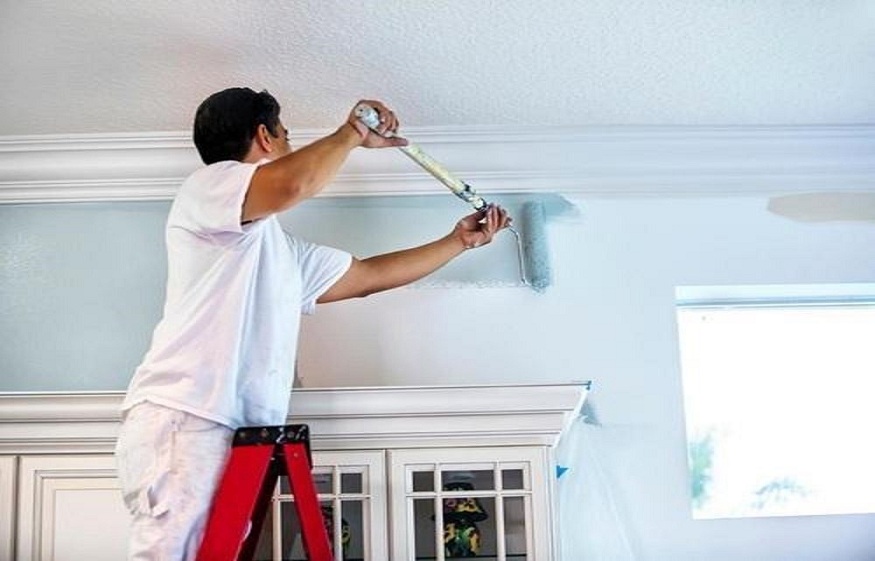
Most property owners and investors think a great interior finish is just about choosing a color or applying a coat evenly. In modern architecture, diverse materials with unique features come into play. Because of that, a successful paint solution isn’t just about color; it’s about a strategy that considers movement at joints, seams, and transitions.
1.Chemical Mastery: Bonding and Flexibility
The foundation of a flawless finish begins at the molecular level. Paint is not just pigment suspended in liquid—it’s a system of resins engineered to behave under stress.
Read More: Step-by-Step Guide to Achieving the Perfect Woo
A professional Interior House Painter will design strategies that achieve mechanical-chemical synergy that is foundational in solving the “Active Furniture” problem. Such an approach includes:
- Selecting resins with optimal flexibility, bridging micro-cracks caused by temperature swings
- Leveraging coatings that resist blocking, maintaining smooth surfaces on doors and railings
- Using waterborne alkyds or urethane-lacquers for high-touch areas to combine leveling with durability
Leverage points:
- Surfaces maintain a “factory-smooth” feel
- Resistance to household cleaners and oils extends maintenance cycles by years
- Critical touchpoints like stair railings retain aesthetic integrity even under frequent use
This is where chemistry meets longevity—every coat is engineered, not just applied.
2. Painting Substrate Stabilization: Resetting Walls for Weather
When studs become “colder” than the rest of the wall, and when ghosting takes effect, you realize that paint job is not about mere pure aesthetics but applied building science that aligns with your home’s interior design. Walls actively respond to humidity, temperature shifts, and thermal bridging. Ignoring these factors leads to accelerated surface degrading.
Expert strategy:
- Seal drywall with high-solids primers or vapor-barrier shells to stabilize moisture absorption
- Correct thermal differences between studs and mud to prevent outlines from showing
- Ensure high-traffic walls and exterior-facing rooms are resilient to sudden climate swings
Outcome:
- Paint adheres consistently
- Walls expand and contract without cracking
- Finish withstands regional environmental extremes without aesthetic degradation
In essence, preparation becomes protection—ensuring every subsequent layer performs optimally.
3. Application Physics: Precision in Motion
A smooth coat isn’t luck—it’s controlled science. Modern painters use advanced techniques to minimize mechanical imperfections.
Key measures:
- LVLP and airless spray systems atomize paint into micron-sized droplets for uniform coverage
- Back-rolling aligns the paint nap, reflecting light evenly and eliminating lap marks
- Attention to wet-edge timing prevents streaking and color variance
The subtle adjustments matter:
- Ceilings and feature walls appear seamless under grazing light
- Cabinetry, trim, and high-sheen surfaces achieve continuous reflection without brush or roller artifacts
This is where technique transforms chemistry into visible perfection.
4.Color Intelligence and Light Management
Even perfect technique fails if the color betrays the space. Metamerism and lighting are ruthless.
Experts account for:
- The room’s light spectrum—warm, cool, or daylight—and adjust pigments accordingly
- Strategic sheen selection: matte hides flaws, satin amplifies trim and detail
- Primer-to-topcoat alignment for consistent absorption and reflection
The payoff:
- Colors remain true all day and night
- The design intent survives natural and artificial light
- Spaces feel cohesive, high-end, and unmistakably polished
Read More: Top Bamboo Sheets That Keep Hot Sleepers Cool All
In essence, the unifies goal of a professional paint job is the convergence of a perfect interior that tells everyone that this beautiful room isn’t an accident—it is an engineered outcome. The power lies in critical professional painting disciplines; chemical science, substrate engineering, application precision, and color intelligence.