

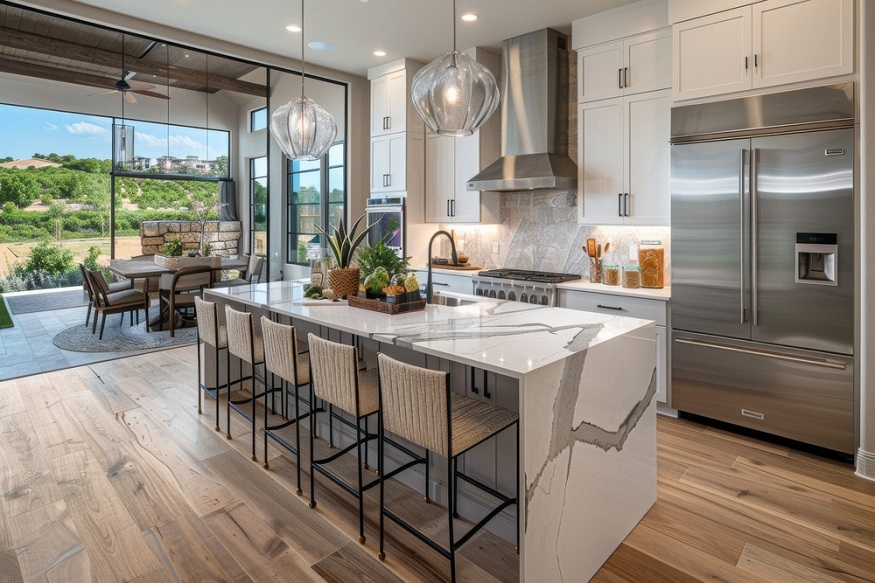
Kitchens get hammered every day. Coffee splashes during the morning rush. Knives slip and scratch. Someone always forgets the cutting board. Hot pans land wherever there’s space. Yet most countertops tap out after a few years, looking beat up and tired when they should still be going strong.
The Daily Battle Your Surfaces Face
Kitchen counters deal with chaos nonstop. Think about yesterday – what landed on yours? Probably a hot coffeepot at 6 AM. Maybe pasta sauce at dinner that sat too long before anyone wiped it up. Homework spread out while kids snacked. Mail piled up next to car keys and whatever else got dumped there.
Cheap surfaces hate this lifestyle. Laminate starts peeling where water sneaks under the edges. That pretty tile countertop? The grout turned disgusting brown two years ago, and no amount of bleach brings it back. Butcher block near the sink? Warped beyond rescue.
Here’s the thing. Kitchens work way harder now than twenty years ago. In those days, folks ordered takeout three times weekly. People are now cooking from scratch, baking, and meal prepping. Add remote work, and kitchen counters become office desks between meals. Surfaces designed for occasional use can’t keep up with this punishment.
What Makes a Surface Actually Work
Tough surfaces don’t flinch at daily life. Hot pans? No problem. Red wine spills? Wipes right off. Lemon juice from last night’s fish dinner? It doesn’t leave a mark. Heat resistance is now essential. No one wants to juggle pots and find trivets. Steam from the dishwasher shouldn’t melt surfaces. The defrosting turkey shouldn’t leave a bird-shaped water stain.
Read More: How to Choose a Kitchen Supplier Who Understands
Staining ruins more countertops than anything else. Blueberry smoothie explosions, soy sauce drips, turmeric from curry night; these things happen. Porous surfaces absorb these stains. Afterward, you’re left scrubbing with many products, and the sauce stain lingers.
The Hidden Costs of Weak Surfaces
Going cheap backfires fast. Those bargain countertops need special cleaners that cost twenty bucks a bottle. Annual sealing appointments. Repair guys showing up to fix chips and cracks. Before long, you’ve spent more maintaining them than good surfaces would’ve cost in the first place.
Worn countertops tank home values too. Buyers walk in, see scratched surfaces, and assume the whole place needs work. It doesn’t matter if you renovated everything else last year. According to the team at Bedrock Quartz, granite countertops still command respect from house hunters; they signal quality and durability that cheap alternatives just can’t match.
Materials That Pull Their Weight
Today’s engineered surfaces handle whatever you throw at them. They’re built differently; tougher than old-school materials but better looking too. Science basically fixed everything annoying about natural stone while keeping what people love about it.
Zero maintenance isn’t just marketing talk anymore. These surfaces actually resist scratches without special coatings that wear off. Heat bounces off them. Bacteria cannot get through the surface. Smart installation changes everything too. No seams means no funky crevices collecting yesterday’s breadcrumbs. Sinks molded right into countertops eliminate that nasty caulk line that turns black after six months. Edges stay crisp because they’re engineered not to chip when your cast iron pan accidentally slides off the stove.
Read More: The Hidden Bond: A Comprehensive Guide to
Conclusion
Kitchens don’t slow down. Neither should their surfaces. Picking materials that quit after a few rounds guarantees headaches and wasted money. Quality costs more upfront, sure. But divide that cost over fifteen years of zero stress. No special maintenance. No panic when someone spills wine. No embarrassment when guests see your beaten-down counters. Solid surfaces earn their keep by working hard without falling apart, just like everything else in a kitchen that actually works.